


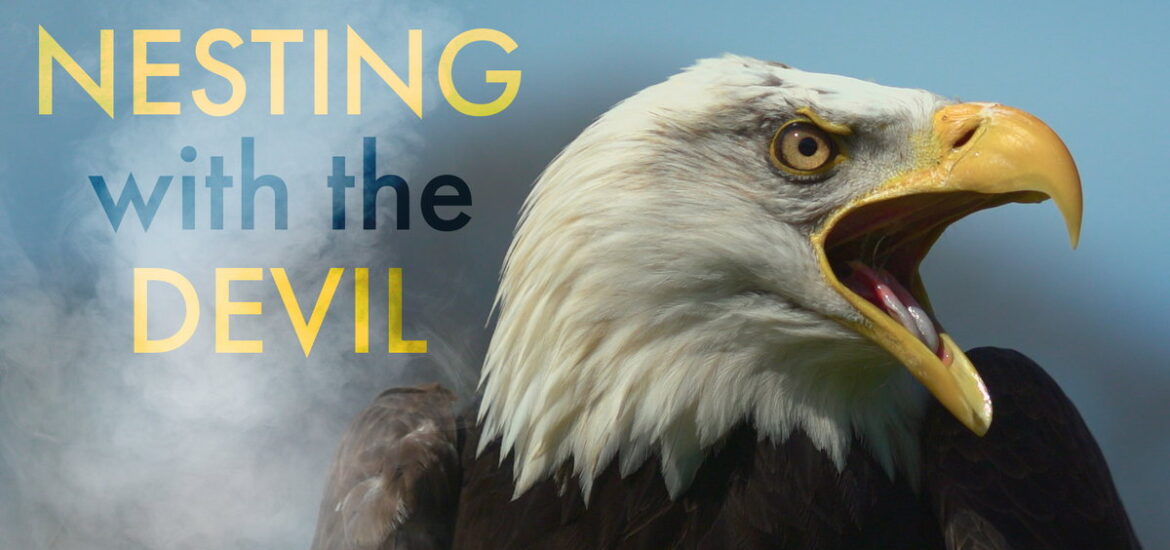
A Rare Look at Nature’s Unlikely Neighbors
The short wildlife documentary Nesting with the Devil offers a compelling look at a relationship that seems impossible at first glance: Great Blue Herons and Bald Eagles nesting within the same coastal habitats of British Columbia. Most viewers know the eagle as a powerful predator and the heron as a quiet, vulnerable fisher. The idea that the two birds would choose to raise their young near each other feels contradictory. The film takes this tension and turns it into a thoughtful exploration of how nature adapts, negotiates, and sometimes surprises us.
Coexistence on a Precarious Coastline
British Columbia’s coastline is one of North America’s richest wildlife regions, yet it is also a place defined by competition. Food sources are seasonal. Tides shift quickly. Nesting trees are limited. In this environment, both species must make difficult decisions about where to build their nests. The documentary follows several colonies throughout the breeding season and shows how each species weighs risk and opportunity.
Herons select tall, dense trees for protection and vantage points. Eagles look for elevated positions with open sightlines. The overlap creates a fragile peace. The documentary shows moments when that peace holds and moments when it breaks.
Predators, Prey, and the Rules That Shape the Wild
One of the film’s central insights is that predator-prey relationships are not constant states. They shift with the season, the available food, and the presence of competitors. Eagles may raid heron nests, but they may also be drawn to areas with abundant bird activity. Herons, despite the danger, sometimes choose to nest near eagles because the larger birds keep other predators away.
The film avoids sensationalism. It does not rely on dramatic narration or forced storytelling. Instead, it lets the birds’ behavior speak for itself. Small gestures reveal more than overt drama: a heron freezing as an eagle glides overhead, or an eagle pausing on a branch as if gauging whether the heron colony is worth the effort.
Cinematic Patience and Coastal Atmosphere
The documentary’s visuals are its most powerful asset. Long-lens shots reveal the nervous energy inside the heron colonies. Aerial views capture the rugged coastline in soft morning light. Close-ups show the texture of feathers, the slow blink of an eye, and the quiet tension between the two species. The filmmakers allow silence to play a major role, using wind, wingbeats, and distant calls to create a strong sense of place.
The pacing mirrors the natural world. Scenes unfold slowly. Movements are deliberate. The result is a film that feels authentic and respectful of the wildlife it portrays.
Ecology, Pressure, and the Future of Shared Habitat
Beyond the fascination of the relationship itself, Nesting with the Devil touches on the challenges facing coastal ecosystems. Habitat loss, human disturbance, and climate-driven changes affect both herons and eagles. By highlighting their intertwined nesting behavior, the film underscores the complexity of wildlife management and conservation in the region.
The documentary does not lecture. It simply shows the reality: species survive by adapting, even when adaptation forces them into uneasy alliances.