









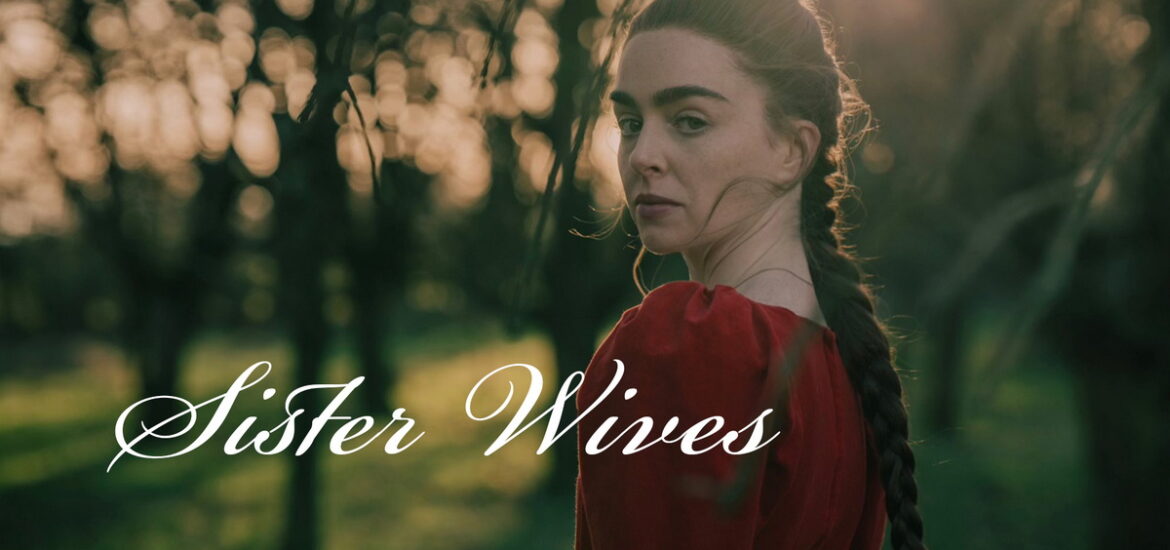
Sister Wives (2024), the 26-minute short written, directed by, and starring Louisa Connolly-Burnham, has emerged as one of the most talked-about queer dramas on the festival circuit. Set within a restrictive Utah polygamist community in 2003, the film tells an intimate story of first love under watchful eyes.
It is a slow burn. It is emotionally restrained. And it leaves a lasting impression.
An Austere World
From its opening frames, Sister Wives establishes a controlled and isolating atmosphere. The muted cinematography drains warmth from the landscape. Interiors feel tight and carefully composed. Every visual choice reinforces the rigidity of the community.
Within this confined world, two young women begin to form a connection that quietly challenges the system around them. Their bond grows in stolen moments. It unfolds in whispers and loaded silences.
The setting is not merely background. It shapes every decision the characters make.
Performances Built on Restraint
Connolly-Burnham delivers a measured and vulnerable performance. Opposite her, Mia McKenna-Bruce brings a warmth that gently disrupts the emotional coldness of their surroundings.
Their chemistry has been widely praised as authentic and grounded. The film avoids melodrama. Instead, it relies on small gestures and lingering looks. The emotional weight accumulates gradually.
This restraint strengthens the tension. Viewers are drawn into the internal conflict long before the stakes fully surface.
Love in Confinement
At its core, Sister Wives is about love constrained by doctrine and tradition. It explores the intersection of faith and personal identity. The characters are not framed as rebels from the outset. They are young women discovering themselves within a system that offers limited choices.
The film also functions as a coming-of-age story. It captures the fragile moment when affection becomes awareness. That transition feels both tender and terrifying.
Some critics have noted that the romance develops quickly given the short runtime. Others argue that the intensity reflects the urgency of suppressed emotion. What remains consistent across reviews is recognition of the film’s emotional clarity.
Visual Language and Emotional Payoff
The cinematography plays a central role in the storytelling. Soft, desaturated tones dominate most of the film. The visual restraint mirrors the characters’ emotional containment.
Then comes a shift.
Without spoiling key moments, the final scenes introduce a visual contrast that feels almost liberating. Color becomes symbolic. The frame opens up. The tonal change underscores the possibility of freedom, even if uncertain.
This careful structural choice gives the short a resonant closing note.
A Strong Entry in Contemporary Queer Cinema
Sister Wives has been described as poignant, controlled, and quietly powerful. While some reviewers wished for a deeper exploration of systemic abuse within polygamist communities, many agree that the film succeeds in telling a focused, intimate story.
Its strength lies in specificity. It does not attempt to speak for every experience. Instead, it centers on two individuals navigating love within constraint.
In just 26 minutes, Louisa Connolly-Burnham crafts a drama that feels emotionally complete. The film respects its characters. It trusts silence. And it demonstrates how short-form storytelling can hold immense emotional depth.
For audiences interested in slow-burn queer romance and character-driven drama, Sister Wives stands out as a must-watch entry in contemporary independent cinema.